
U.S. Government Battles Family in Court Over Ten Coins Worth Millions
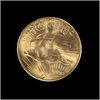
In 2004, the family of Israel Switt, a deceased gold dealer, found ten double eagle coins in the former dealer’s safety deposit box. The family contacted the United States Mint in an attempt to authenticate the coins. The government seized the coins, claiming that Switt must have stolen them since they had never been circulated. The family sued for the coins’ return.
The government asserts that Switt and a corrupt cashier at the Philadelphia Mint stole the coins and that Switt’s heirs know they are not the legitimate owners of the coins. Attorneys for the family claim that Switt gained legitimate ownership of the coins by exchanging gold with the Mint for the double eagles.
A Federal District judge stated the government would have the burden of proving in court that the coins were government property. However, the government must only prove its case beyond a preponderance of the evidence.
See John Schwartz, Family Battles U.S. Over 10 Coins Worth Millions, The New York Times, Jul. 8, 2011.
Special thanks to Joel Dobris (Professor of Law, UC Davis School of Law) for bringing this article to my attention.