
Book on Special Needs Trusts
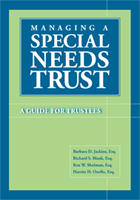
Barbara D. Jackins (attorney, Belmont, MA), Richard S. Blank (attorney, Boston, MA), Ken W. Shulman (attorney, Boston, MA), & Harriet H. Onello (attorney, Lexington, MA) recently published their book entitled Managing a Special Needs Trust: A Guide for Trustees (DisABILITIES BOOKS 2010). A description is below:
Managing a Special Needs Trust: A Guide for Trustees is a completely revised, updated, and expanded edition of Special Needs Trust Administration Manual: A Guide for Trustees (2004, 2005). Even though earlier editions focused on Massachusetts laws and procedures, over 10,000 copies were purchased by parents, family members, and professionals across the USA.
The authors have done much more than change the name. “Readers of the previous editions will notice one major change…this book applies to all states…we cover uniform statutes that have been adopted in most states. We also focus on the rules of major federal benefit programs that provide cash, medical benefits, and housing subsidies to people with disabilities.”
Managing a Special Needs Trust: A Guide for Trustees is an easy-to-understand reference guide for parents, individuals with disabilities, family members and advocates as well as attorneys, financial planners, tax advisers, social workers and educators—anyone who is managing a special needs trust and/or working with families on future planning for a family member with a disability.
This 242-page book clearly explains how special needs trusts relate to the complicated public benefit programs that assist people with disabilities. This book tells how to:
- Understand the rules of major public programs that provide cash, medical care, and housing assistance to a family member with a disability.
- Use practical strategies to pay for items and services that an individual needs without reducing public benefits.
- And much more…
All families (including families with limited assets) can consider establishing a special needs trust because it is not necessary to put any money into an account when they sign the trust. When parents are gone, a portion of their estate, life insurance benefits, and other funds can pass to the special needs trust.