
Charitable Gift Planning
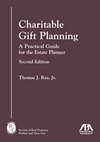 Thomas J. Ray, Jr. (attorney, St. Louis, Missouri) has recently published his book entitled Charitable Gift Planning: A Practical Guide for the Estate Planner (2nd ed.).
Here is a description of this book:
When Congress passed the Pension Protection Act of 2006, they created what some have called “the most significant reform to charitable tax planning since the Tax Reform Act of 1969.” Now Thomas J. Ray, Jr. has updated and revised his bestselling deskbook, Charitable Gift Planning, to clearly explain the impact of the Pension Protection Act as well as the Tax Reform and Health Care Act of 2006 on all aspects of charitable gift planning. As with the first edition, this is a truly practice-focused book that provides clear and insightful explanations of all relevant tax law, financial considerations, drafting guidelines, and forms for practitioners interested in planning for clients’ charitable giving needs as part of a comprehensive estate and financial plan.
This completely updated and revised edition contains important updates indicated throughout the text that are occasioned by the Act. In addition to changes wrought by these legislative enactments, the second edition contains updated information that reflects new court opinions and rulings by the Internal Revenue Service. The new edition now also includes tables reflecting the Code Sections, Treasury Regulations, and IRS rulings cited in this text, making it even more useful as both a practice and research tool. As before, it includes a valuable CD-ROM containing the book’s forms in a downloadable format.
Comprehensive in its coverage, Charitable Gift Planning begins with the income tax rules and the gift and estate tax deduction, the foundation of all charitable giving. It explains in detail the rules governing two key kinds of trusts: charitable remainder trusts and charitable lead trusts, examining the pros and cons of each and when each trust is most useful. Further discussion covers planning options available, transactions involving diverse property, and trustee issues.
Both technical and practical in format, the book thoroughly explains the rules and requirements for using these tools in estate planning. Because calculations form a considerable part of a planning practice, it includes relevant flow-charts, spreadsheets and calculations to explain numerically and visually how these concepts work. At the same time, Charitable Gift Planning features many useful practice pointers to answer common questions that arise in charitable planning. It also includes numerous case studies that explain how to use these tools in a variety of planning situations. The appendix features sample forms and other materials useful in assisting clients with their charitable planning needs, including gift annuity tables and drafting tools.
Among the topics covered in Charitable Gift Planning are:
- How to make basic charitable gifts with retirement plans and IRAs
- Planning options available with charitable remainder trusts
- Using private foundations and supporting organizations to maximize donor control
- Using a family business as a source for a donor to make charitable gifts
- “Grantor” and “super-grantor” lead trusts
- Terminating charitable remainder trusts