
Guide to Education Planning
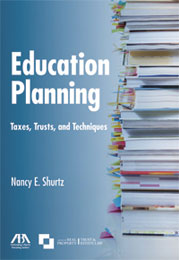
The following is a description of the book:
To help you advise clients who are scrambling to figure out how to finance their children’s education, Education Planning: Taxes, Trusts, and Techniques offers an in-depth guide to the strategies, vehicles, and estate and tax planning available to these families. While the text focuses on the popular yet complex 529 plans, it also provides the planner with information about all other available college savings vehicles.
In eight parts and 36 chapters, Education Planning: Taxes, Trusts, and Techniques covers the complex vehicles that can be used in saving for college and the various forms of aid available when those savings vehicles prove inadequate. The first part of the book examines the benefits and costs of a college education while providing a broad overview of the various strategies for paying for college.
The book s second part addresses the major instrument for college savings: Section 529 savings plans. The plans were complex when they were created by Congress, and made more complicated still by six subsequent tax acts that have modified, amended, and expanded the plans. Further levels of complexity are added by federal and individual state tax rules, nontax issues, and that the plans vary from state to state and plan to plan. Section 529 prepaid tuition plans are discussed next, offering a less flexible option, but one that offer guaranteed tuition rates even when investment returns are low.
While Section 529 plans offer tremendous tax and nontax benefits, a sensible education plan should combine 529s with other savings techniques. Coverdell Educational Savings Accounts, qualified savings bonds, retirement vehicles, UGMAs/UTMAs, trusts, insurance, and other investments are compared with 529 plans in Part Four. For taxpayers who have not saved enough, there are a number of pay-as-you-go tax techniques. The options discussed in Part Five include direct gifts from relatives, education credits, the tuition deduction, and employment-related education benefits.
Financial aid for paying college costs is available through hundreds of resources and programs. The next part discusses both need-based and merit-based sources of financial aid, beginning with the methodology for determining eligibility for an award. Other topics cover the impact of savings techniques and tax incentives, strategies for financial aid qualification, grants and scholarships, and the college loan system. Because more students are graduating with large loan, the student loan interest deduction and repayment assistance programs are also discussed.
Finally, the book helps you put all this information together, explaining how to integrate the tax rules, and offering different strategies to use when planning for lower-, middle-, and upper-income taxpayers.
Written in a clear and accessible manner, the book features numerous planning tips, charts, and real-life examples, as well as generous use of explanatory notes. The appendix includes sources for more information, sample trusts, regulations, notices, and forms.