
Slave Cemetery in Georgia Forest Home to ‘Invisible Dead’
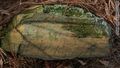
Duncan Shropshire brought his 8-year-old daughter, Mia-Grace, into the Northwest Georgia forest to share their family history with her. They came upon a large clearing with rows of fist-sized rocks bulging out of the ground to mark graves. Their slave ancestors were buried there starting in the 1800s until about 1905. Mia-Grace’s great-great-great grandfather, a slave-owning man, had five children by Mia-Grace’s great-great-great grandmother, Molly, who was buried there in the forest.
Duncan then walked Mia-Grace to another gravesite about a mile away with 10-foot headstones and showed her the grave of Wesley Weatherspoon Shropshire, a colonel in the Civil War for the Confederacy and Mia-Grace’s great-great-great grandfather. Mia-Grace was puzzled as to why there were two separate cemeteries for her ancestors.
The Shropshire gravesite in the Appalachian foothills outside of Gore, Georgia would be a unique archaeological find if it were indeed a slave cemetery. Michael Trinkley, who specializes in cemetery preservation, stated, “The problem with preserving these types of sites is that African-American cemeteries are hard to find. You can think of the people buried there as the invisible dead. And not knowing where they are, or how many there are, makes them susceptible to loss.”
John Sepulvado, Neglected Graves Home to ‘Invisible Dead’, CNN.com, Feb. 26, 2011.