
Leahy-Smith America Invents Act
The controversy of patenting a tax strategiesbegan in 2006 when Wealth Transfer Group sued John Rowe (then executive chairman of Aetna) in U.S. District Court in New Haven for patent infringement Three years before the suit, Wealth Transfer Group had patented a tax strategy involving funding GRATS with nonqualified stock options.
Rowe set up two trusts and funded them with non qualified stock options (with an estimated total of $28.5 million) during the three years before the suit. Wealth Transfer Group sought royalties, triple damages, and attorney’s fees; the case settled in 2007 for an undisclosed sum.
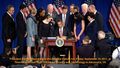
Max Baucus, Finance Committee Chairman, and Chuck Grassley, senior Committee chairman, introduced the patent bill, stating that the legislation, “stops tax patents from providing windfalls to lawyers and patent holders by preventing them from holding exclusive rights to use loopholes, which could provide some businesses with unfair advantages over their competitors.”
The new law does not revoke the 161 issued tax patents, but it does halt the issuance of new tax patents.
See Deborah L. Jacobs, No More Patents For Cute Tax Tricks, Forbes, Sep. 20, 2011.