
The $500 Million Mystery Will, Signed by Ghosts
Special thanks to Matthew Bogin, (Esq., Bogin Law) for bringing this article to my attention.
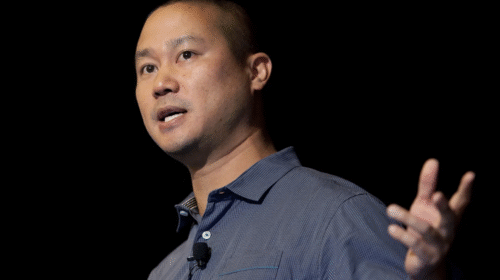
The death of Tony Hsieh, the former CEO of Zappos, took an unexpected legal turn when a mysterious will surfaced years after he died in 2020. Hsieh, who passed away at 46 following a house fire, had appeared to leave no will, meaning his roughly $500 million estate would go to his parents. But in 2025, a seven-page document allegedly written in 2015 arrived at a Nevada law firm, redistributing his wealth in puzzling ways and immediately triggering suspicion and litigation.
The will itself raised more questions than answers. It included unusual provisions, such as a $50 million transfer to a trust that appears not to exist, and was accompanied by a strange backstory involving a deceased man in Pakistan who supposedly possessed the document. None of the listed witnesses or individuals tied to the will have been located, and even the lawyers named as executors had no prior connection to Hsieh. Despite these irregularities, the document technically met Nevada’s legal requirements, allowing it to move forward and setting the stage for a high-stakes probate dispute.
Hsieh’s later life adds further complexity to the case. Once celebrated for building Zappos into a billion-dollar company and investing heavily in revitalizing downtown Las Vegas, he reportedly struggled with substance abuse and erratic behavior in his final years. Friends described increasingly grandiose and delusional ideas, alongside heavy spending and isolation. These circumstances have fueled speculation about whether the will could be authentic, forged, or even part of a larger scheme tied to his unusual lifestyle and declining mental state.
Now, the validity of the will is headed for a prolonged court battle, with Hsieh’s family calling it a forgery and presenting expert evidence to support that claim. The case could take years to resolve and cost millions in legal fees, echoing other famously chaotic estate disputes. In the meantime, Hsieh’s legacy was both as an innovative entrepreneur and a deeply troubled figure, and remains entangled in a mystery that continues to blur the line between reality and fiction.
For more information see David Segal “The $500 Million Mystery Will, Signed by Ghosts,” The New York Times, March 15, 2026.