
Tylenol Case Reopened
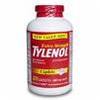 Many law professors use the tragic case of Janus v. Tarasewicz, 482 N.E.2d 418 (Ill. App. Ct. 1985) to teach the concept of survival, especially because it is included in many leading casebooks such as Jesse Dukeminier, Stanley M. Johanson, James Lindgren, & Robert H. Sitkoff, Wills, Trusts, and Estates at 68 (7th ed. 2005).
Here is a summary of the case from Simultaneous Death, jrank.org.
[This case] arose out of a freakish series of events that began in the Chicago area in 1982. Adam Janus unluckily purchased a bottle of Tylenol capsules that had been laced with cyanide by an unknown perpetrator prior to its sale at retail. On the evening of September 29, 1982, the day of Adam’s death, his brother, Stanley Janus, and Stanley’s wife, Theresa Janus, having just returned from their honeymoon, gathered in mourning at Adam’s home with other family members. Not yet knowing how Adam died, Stanley and Theresa innocently compounded the tragedy by taking some of the contaminated capsules themselves. Upon their arrival at the intensive care unit of a hospital emergency room, neither showed visible vital signs. Hospital personnel never succeeded in establishing any spontaneous blood pressure, pulse, or signs of respiration in Stanley and pronounced him dead. Hospital personnel did succeed in establishing a measurable, though unsatisfactory, blood pressure in Theresa. Although she had very unstable vital signs, remained in a coma, and had fixed and dilated pupils, she was placed on a mechanical respirator and remained on the respirator for two days before she was pronounced dead on October 1, 1982.
Stanley had a $100,000 life-insurance policy that named Theresa as primary beneficiary and his mother, Alojza Janus, as contingent beneficiary. The 1953 version of the Uniform Simultaneous Death Act, in force in Illinois, provides that if there is no sufficient evidence that the insured and beneficiary have died otherwise than simultaneously, the proceeds of the policy shall be distributed as if the insured had survived the beneficiary. The Illinois Court of Appeals held the act to be inapplicable because a PREPONDERANCE OF THE EVIDENCE established that Theresa survived Stanley, albeit by only a couple of days. The result: the proceeds of Stanley’s $100,000 policy did not go to his mother, Alojza, as contingent beneficiary, but to Theresa’s father, Jan Tarasewicz, as administrator of her estate.
The identity of the person who spiked the Tylenol is still unknown. However, there has been a recent resurgence of interest in solving this crime as the following excerpts from Law enforcement to review Tylenol murders, CNN.com, Feb. 4, 2009 demonstrate:
The FBI announced Wednesday that it is working with Illinois state and local police to review evidence related to the 1982 Tylenol murders. * * *
Agents on Wednesday searched the Cambridge, Massachusetts, house of James W. Lewis, who was convicted of sending an extortion note to Johnson & Johnson but denied having anything to do with the poisonings. * * *
Lewis’s wife LeAnn is listed as administrator of a Web design company called Cyberlewis.com. Its Web site lists the company’s address as the same address that authorities searched Wednesday.
On its Web site is posted a note that says, in part, ” … I was villified (sic) globally as the Tylenol Man, accused of being the mass murderer who spiked Tylenol with cyanide in Chicago back in 1982, killing seven. Those grotesque accusations obviously were false, otherwise I could not be writing these words. After 25 years, the Tylenol murders remain unsolved. I have lived a long, bizarre life and I have seen a lot, yet I am literate and lucid enough to view and describe, compare and contrast hugely diverse worlds, cultures and topics, without a moment of boredom, all with an eye to professionalism, demographics and marketability plus ears and heart sensitive to good taste and victims’ feelings.”