
Giorgio Armani’s bizarre will has caused a rift at his fashion label
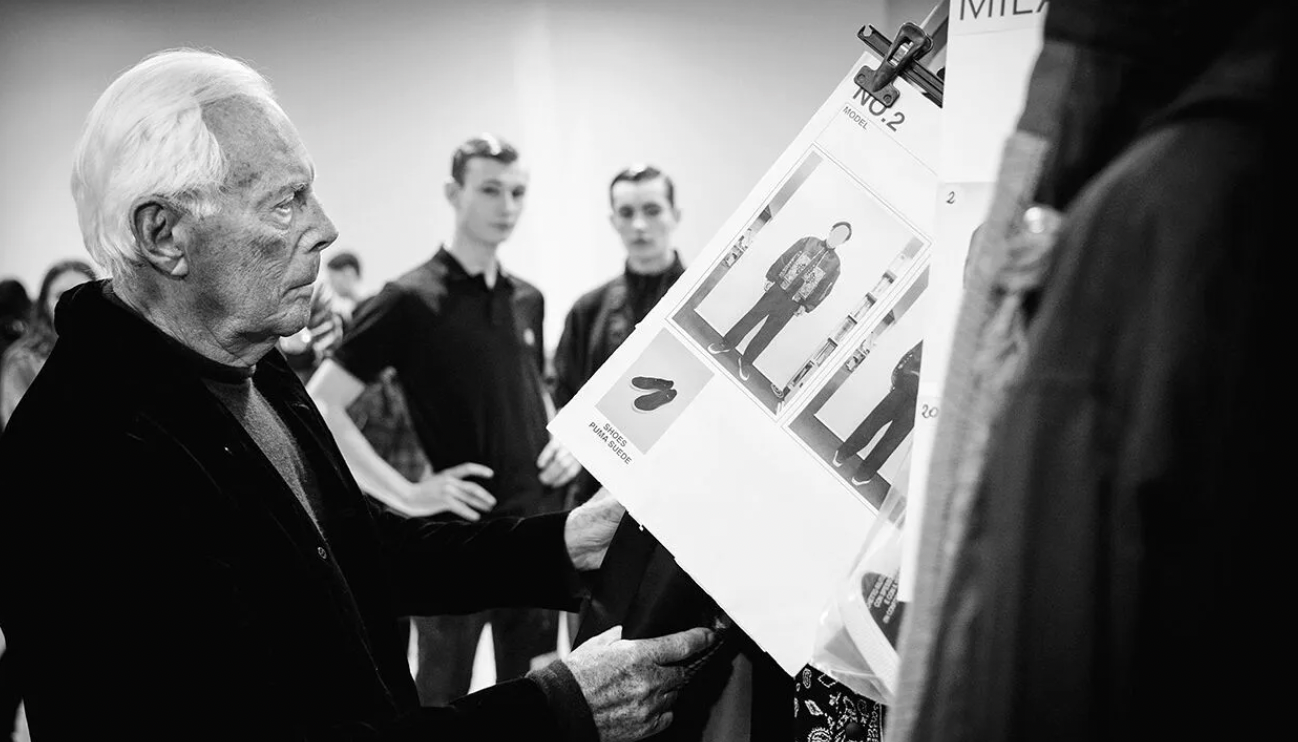
[Special thanks to Joel C. Dobris (Professor of Law, UC Davis School of Law) for bringing this article to my attention.]
When Giorgio Armani died in September, the will left by the Italian fashion mogul offered a glimpse into the glamour of one of the world’s leading luxury houses—and the dysfunction.
The strangest thing was Armani’s succession plan. The designer, nicknamed “King Giorgio”, died at 91 without children. He left the company to which he gave his name, and owned in its entirety, to his foundation, family members and long-time collaborator, Leo Dell’Orco—and ordered them to sell a 15% stake, specifying both the timing (within 18 months of his death) and the preferred buyers (EssilorLuxottica, an eyewear-maker, L’Oreal, a beauty giant, or LVMH, the world’s biggest luxury conglomerate). An additional stake of 30-55% was to be sold to the same buyer within three to five years.
That has saddled the new leadership of Armani with the unenviable task of reviving a fading luxury brand amid a market downturn while securing a respectable valuation in a sale. A split on the board has emerged, with some determined to execute the designer’s will to the letter and others wanting to focus on fixing the business. The choices they make could shape the future of Italian luxury.
Armani’s core fashion business has struggled, with constant discounting eroding the interest of well-heeled shoppers. The firm is increasingly reliant on royalties from cosmetics and other products made by others under its label. Figures for 2024, published shortly before Armani’s death, showed revenue was down by 6% and operating profit (before depreciation and amortisation) by 24%. “The power of the brand will fade if nothing is done,” warns Flavio Cereda-Parini of GAM, an asset manager. “The clock is ticking.”
Giuseppe Marsocci, one of the designer’s lieutenants, has taken on the task of transforming Armani as its new chief executive. Luca Solca of Bernstein, a broker, points to an American rival, Ralph Lauren—which has recently enjoyed a surge in sales—as a potential blueprint for resurrecting Armani: trim supply, refresh designs, splash out on marketing and take control of pricing by selling more through the brand’s own stores and websites. Much of that might have been difficult while Giorgio Armani was still around; one person close to the firm says he was a “control freak” and a “dictator”.
L’Oréal and EssilorLuxottica, which hold licences for Armani beauty products and eyewear, respectively, might be a more natural fit. Buying a stake in the Italian label would save them shelling out on royalties. Armani, as the fourth-largest fragrance franchise in the world, is crucial to L’Oréal. But buying into a fashion house would be out of character for a business that insists it is “all beauty but only beauty”. EssilorLuxottica has closer ties still. It has sold Armani eyewear since 1988, and the Italian designer also owned a 2% stake in the eyewear-maker before his death. Its acquisition of Supreme, a streetwear label, in 2024 hints at a willingness to stray beyond spectacles.
If a deal is not agreed, Giorgio Armani’s will instructs that his firm instead be publicly listed. Many in Italy’s luxury industry would rather that over a sale to LVMH (French), L’Oreal (French) or EssilorLuxottica (French-Italian). Some on Armani’s board would prefer to extend the 18-month deadline and then make a choice based on how the turnaround is progressing.
For more information see, “Giorgio Armani’s bizarre will has caused a rift at his fashion label,” The Economist, February 19, 2026.